


From CO₂ to Carbon Fiber: Baton Rouge Startup Breaks Petrochemical Chain
July 13, 2026
A Baton Rouge startup plans to upend the carbon fiber industry by ending its reliance on oil and natural gas feedstocks.
Renovigo Chemicals’ proprietary process will use carbon dioxide emissions, water, ammonia, and electricity to make acrylonitrile, a chemical intermediate used in carbon fiber, plastics, and synthetic rubber.
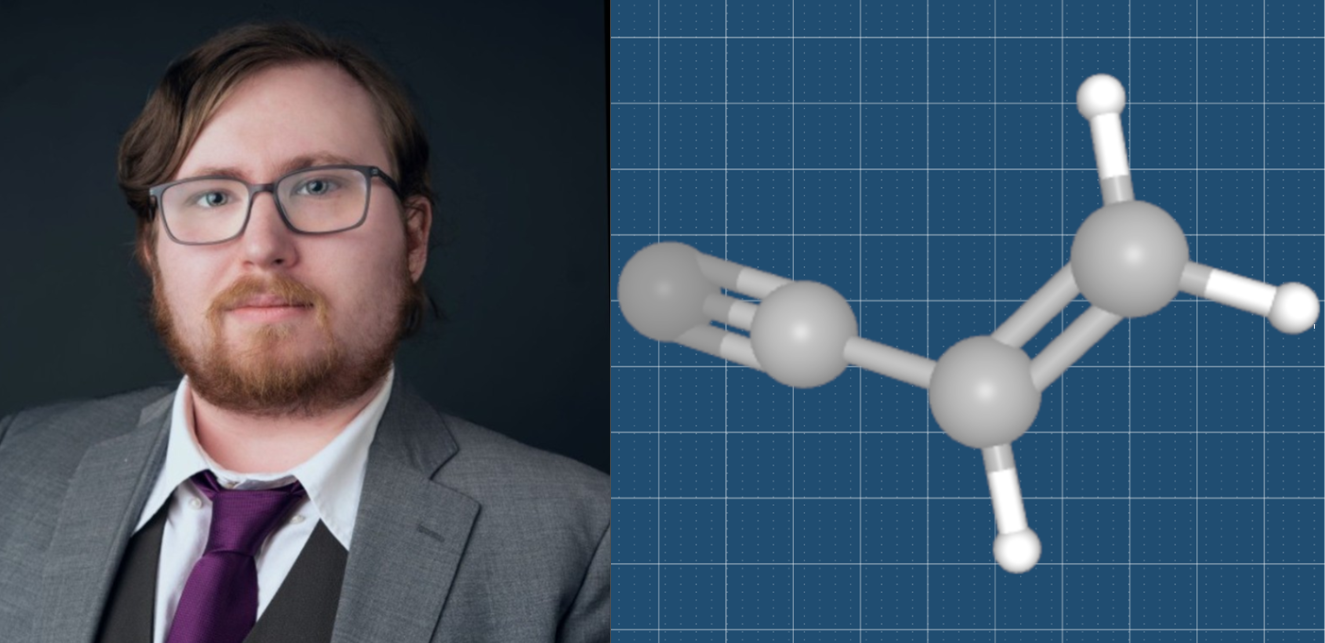
Jeremiah Piper, CEO of Renovigo Chemicals, and an acrylonitrile molecule, a chemical intermediate used in carbon fiber, plastics, and synthetic rubber.
“We won’t have to depend on petroleum feedstocks. So, we won’t be vulnerable to the violent price swings and supply interruptions that plague 90% of acrylonitrile makers, especially now,” CEO Jeremiah Piper said. “Those companies all depend on propylene derived from oil or natural gas. That process is decades old and can’t keep up with demand, regardless of supply.”
Renovigo’s technology will create price and supply reliability, he said.
In addition, Renovigo’s manufacturing process will sequester five tons of CO2 for every ton of acrylonitrile the company produces. The carbon-negative process helped Renovigo win a $200,000 proof-of-concept grant from Future Use of Energy in Louisiana, or FUEL, an LSU-led partnership designed to position the state as a global leader in energy innovation, decarbonization, and workforce development.
Piper’s carbon fiber odyssey began in 2018. He was a student at Louisiana Tech University. A prosthetic design class – Piper based his on a custom air muscle he invented -- sparked his interest in carbon fiber. Stronger than steel and lighter than aluminum, the material is used in everything from auto parts and drones to smartphone cases and pickleball paddles. It is also prohibitively expensive. Piper wanted to know why.
He started by tracing the supply chain, first to acrylonitrile and then to propylene. The supply-demand gap, he realized, was built-in and growing. Figuring out its origins took him down a rabbit hole. One academic paper led to another with footnotes linked to obscure industry reports. When he emerged, more than 100 papers and several months later, Piper understood the business path he would follow.
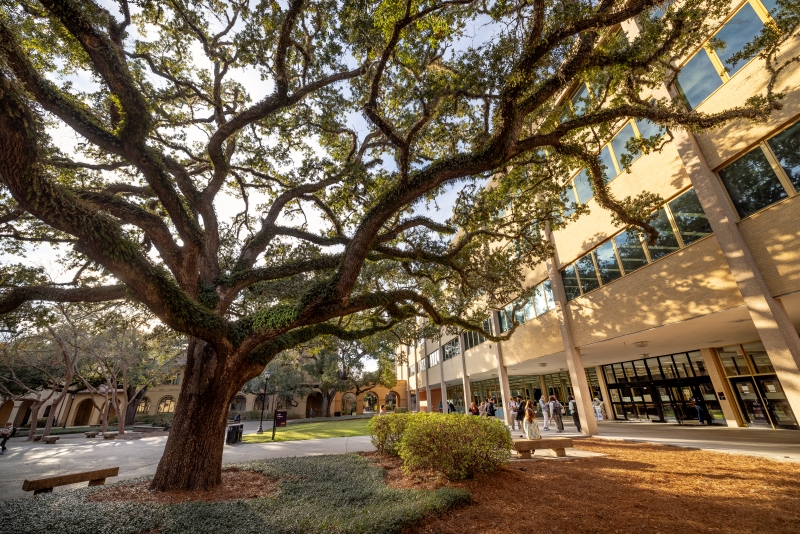
Renovigo CEO Jeremiah Piper spent hours in the LSU Library researching how acrylonitrile, a key component in carbon fiber, is made.
– Photo by Eddy Perez
Extracting the information needed to make acrylonitrile at an industrial level took quite a bit longer, thanks to the COVID pandemic and many chemical companies’ reluctance to share information about their technology and processes. Former LSU Chemistry Department Chair John Pojman helped by introducing Piper to electrochemical reduction, or using electricity, water, and CO2, to synthesize hydrocarbons. In 2021, Piper launched Renovigo, which means “renewal” in Esperanto.
However, Piper lacked the expertise to make his concept a reality. He faced a choice: go back to school for a chemical engineering degree or find partners with those skills. He hit LinkedIn and connected to chemical industry consultant Roy Anderman Jr. and to Chief Operating Officer David Turner. Turner believed in the concept enough to invest. They added Molly Adams, a process engineer, as chief science officer.
Adams used Aspen software, the Adobe of chemical engineering, to translate Piper’s years of research into a scalable process.
Next, Piper sought advice organizing his startup. He enrolled in LSU Innovation Park’s EDA BRIDGE program, which teaches innovators to turn their inventions into businesses. Jason Boudreaux, associate director of entrepreneurial services at LSU Innovation Park, served as his mentor and guided Piper to services at the Louisiana Small Business Development Center at LSU.
One of EDA BRIDGE program’s most important lessons is customer discovery. Participants interview dozens of potential customers about their needs, adapting their discoveries to fit.
“Customer discovery in the chemical industry was a bit tricky. A lot of our potential customers are not easily found or approachable,” Piper said. “These are multibillion-dollar corporations, not your average consumer. Securing interviews, especially as a small business no one had heard of, was uniquely difficult.”
Jeremiah Piper, Renovigo CEO
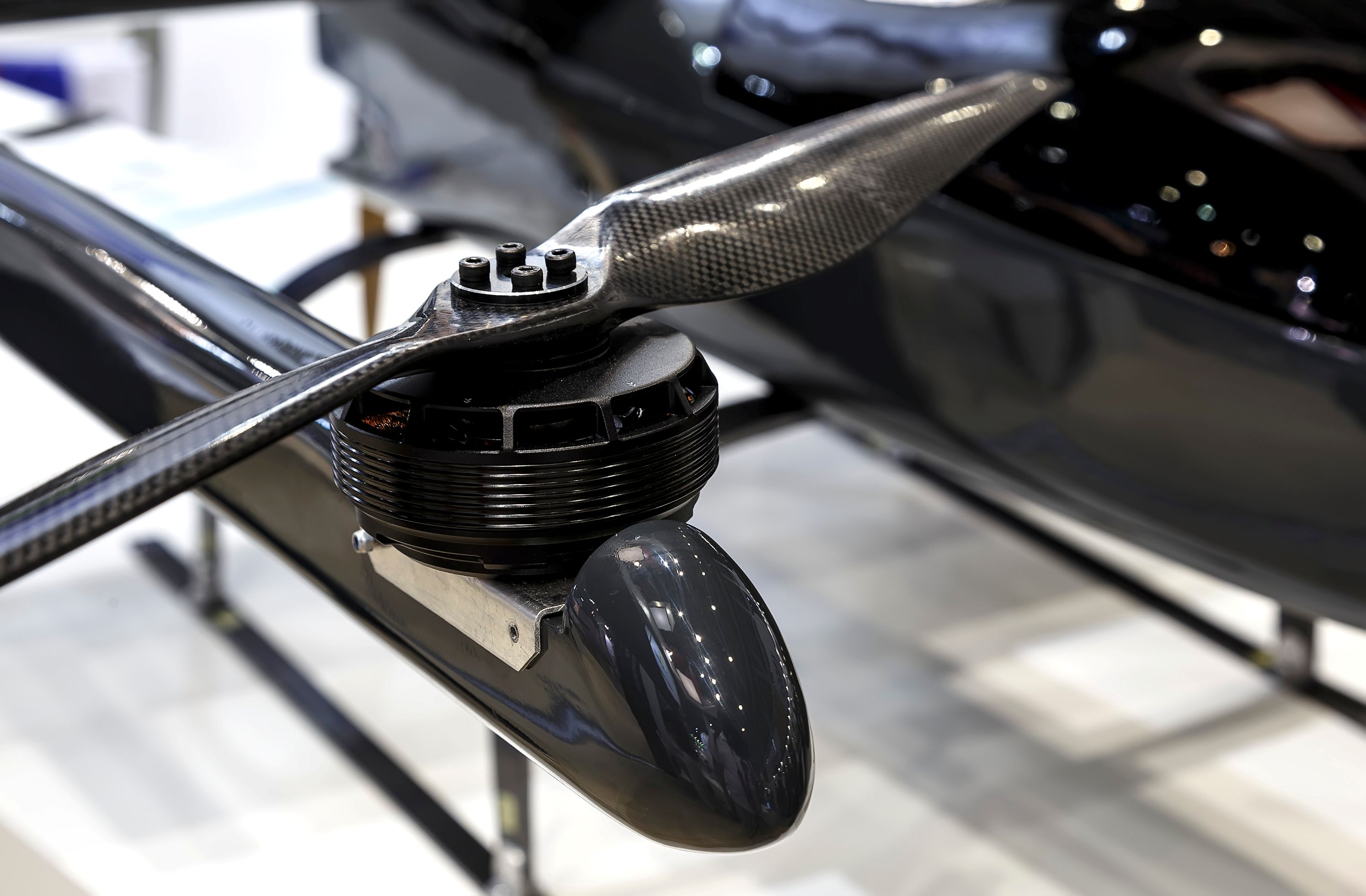
Carbon fiber is used in everything from auto parts and drones to prosthetic limbs and pickleball paddles.
Boudreaux helped Piper navigate the rarified atmosphere, reconnecting him to Anderman, who was serving as an Executive-in-Residence through the EDA BRIDGE program. Anderman helped Renovigo build its first techno-economic analysis the startup uses to make its business case to potential investors and partners. The document applies technical modeling, market pricing, business costs and financial projections to answer key questions for early-stage investors or potential partners: Can the technology work? And if it works, is it economical?
“The SBDC and LSU Innovation Park have been integral to getting us this far,” Piper said.
“Renovigo is exactly the kind of deep technology I-Corps and the SBDC exist to support. This is a fundamental reimagining of a critical industrial process,” Boudreaux said. “Sequestering five tons of CO2 for every ton of acrylonitrile is infrastructure-scale innovation. Programs like I-Corps and SBDC exist to de-risk these kinds of transformative ventures and ensure they don’t die in the lab.”
Piper also got help from Idea Village Pitch Coach Abbey Kish to turn his highly technical presentation into something more investor-friendly.
Renovigo is currently working on its final techno-economic analysis and design for its pilot plant, a facility that will cost around $10 million to build. The FUEL grant will help the company advance its research and development..
The company is also looking to attract enough investment – $2 million to $4 million – to produce acrylonitrile samples in the lab and get those samples into as many people’s hands as possible.
Renovigo expects the demo plant will take a year or two to finalize. The cost for a plant that makes industrial levels of acrylonitrile is estimated at $200 million.
“Are we still a few years out from being able to build a full-scale facility? Yes,” Piper said. “But the interest we’ve drawn has helped us understand our next steps, and we’re already gaining interest from potential investors and partners far and wide.”