


Book Release: LSU Alumna Builds on ’90s LSU Social Work Case
March 31, 2026
LSU alumna Monique Morrison optioned both the LSU book rights and the story rights related to a death penalty case researched by Professor of Research Cecile Guin, former director of the LSU Social Research and Evaluation Center, in the late ’90s. The book comes out April 16 with Bloomsbury.

Monique Morrison is a proud LSU alumna who lives in California and Oregon and works in the film, television, and publishing industry. She never met Feltus Taylor before he was executed but has been trying to tell his story for over 20 years.
Multiple events are planned for April 7, 2026, on LSU’s main campus in celebration of the book release, including a dialogue with Morrison; press conference; panel discussion; and book signing, all on the theme of Bearing Witness: Ethics in Difficult Storytelling.
There are two versions of this story.
In the first, a Black man named Feltus Taylor is neglected and abandoned as an infant by a drug-addicted mother in and out of prison. He suffers severe developmental delays, gets bullied and taken advantage of, commits
an inexcusable and horrific act of violence, and is sentenced to death. While on death
row, he writes a manuscript about his own life to help other young men, inspires fellow
inmates, and gains the support of two local churches—one Baptist, one Episcopalian—as
well as lifelong friends around the world.
In the second, a Black man named Feltus Taylor is a murderer. He shot and killed Donna
Ponsano, the cook at the Cajun’s Fabulous Fried Chicken restaurant on Florida Boulevard
in Baton Rouge, from which he’d recently been fired. He also shot and permanently
injured the manager, Keith Clark, before driving off with a few hundred dollars in
cash from the register.
LSU Professor of Research Cecile Guin knows both of these versions are true. As the
former director of the LSU Social Research and Evaluation Center (1996-2018), she
worked on 115 death penalty mitigation cases as an independent expert, researching
the lives of the accused to help explain to the juries why they did what they did.
“Doing forensic social work histories means developing a life story, but it’s done in a manner that’s objective, completely factual, and honest,” Guin said. “It’s not like you can take some good things and leave the bad things out. You have to pull all of the stuff into it and tell the story of how that person got to that place in their life.”
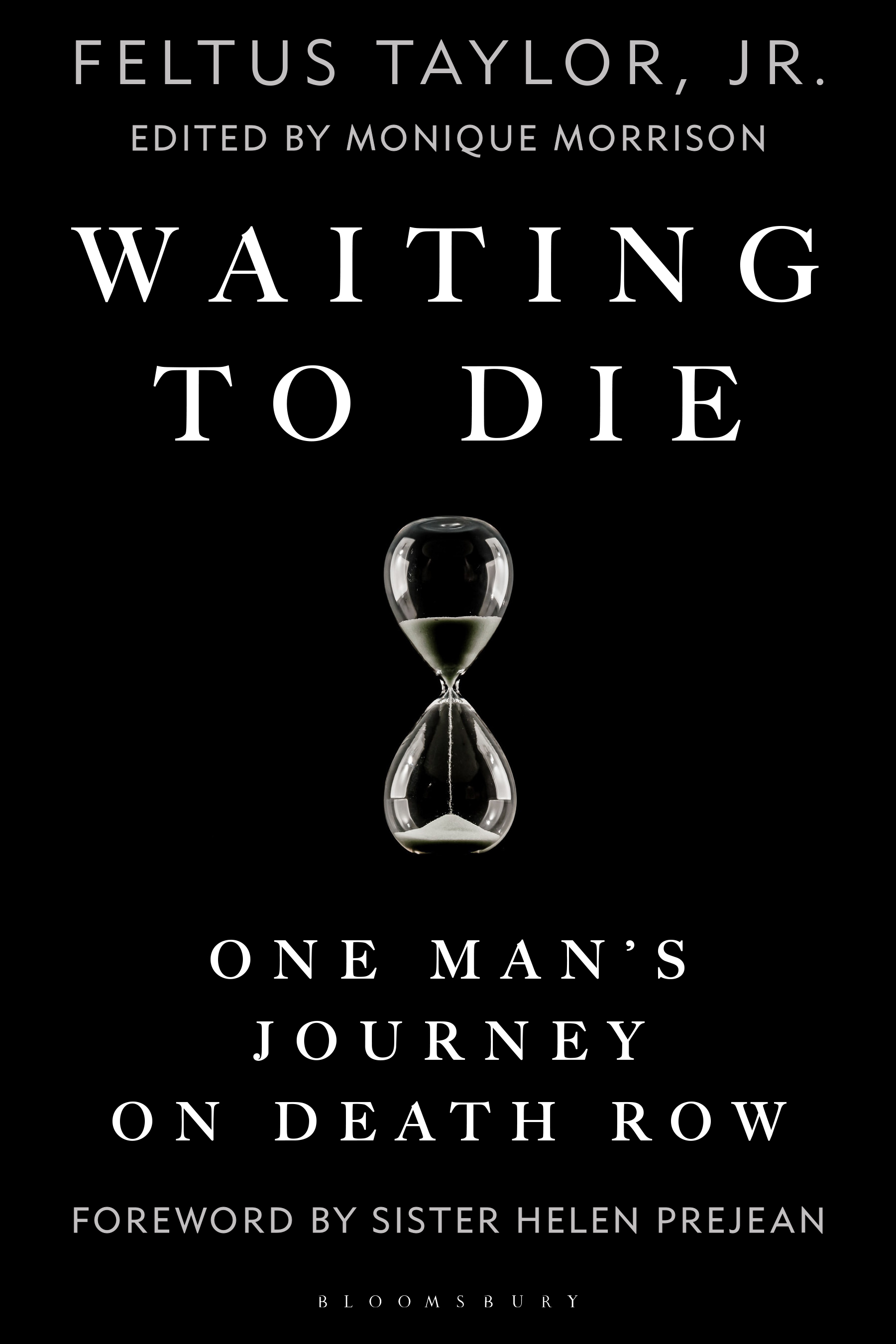
Waiting to Die: One Man’s Journey on Death Row features Feltus Taylor’s writings up to the morning of his death by lethal injection at Louisiana State Penitentiary in 2000. LSU alumna Monique Morrison wrote the introduction and acknowledgements while LSU Professor Cecile Guin wrote the prologue. The foreword is by Sister Helen Prejean, the author of Dead Man Walking.
For Feltus Taylor’s case alone, Guin and her team tracked down hundreds of records—from schools and juvenile institutions, medical records, birth records, and court records. She and Jane Smith, a colleague and fellow alumna of LSU’s Master of Social Work program with whom she’d graduated in 1978, interviewed family members and spent hundreds of hours with Feltus Taylor while he was on death row at Louisiana State Penitentiary (also known as Angola), the only maximum-security prison in the state. For years, Taylor mailed handwritten letters to Guin’s office on a weekly basis, where student workers typed them up and added the hard copies to an increasingly thick binder. Eventually, Guin and Taylor’s legal team helped create a foundation to safeguard his intellectual property.
Faith was a big part of Taylor’s life and writing in prison, and Guin ended up hiring an LSU graduate student, Ronlyn Domingue (now an author), to help shape his manuscript and make sure he shared all aspects of his story.
Then, at 39 years old in the summer of 2000, Feltus Taylor was executed by lethal injection. His lawyer and spiritual advisor were in the room with him, while Guin stayed outside.
“I didn’t want to go to Feltus’s execution,” Guin remembered. “I didn’t want to see him die. And it worked out in a way, because when you witness an execution, you have to go into the room early, well ahead of time, while I was able to sit outside with him until the moment he walked in.”
Guin can recount many “strange stories,” as she calls them, about Feltus Taylor’s impact on others while on death row. Her own sister ended up corresponding with Taylor and adopting his younger next-cell neighbor, Jimmy Williams, who’d been 16 or 17 when he was convicted and never went to high school. Today, Williams is no longer on death row but remains incarcerated. He earned his bachelor’s degree in Christian ministry from New Orleans Baptist Theological Seminary in 2019 and is now working on an HVAC certification to ease employment after he is released. Taylor also willed his personal Bible—originally a gift from his second spiritual advisor, Charles deGravelles—to Guin’s sister. And one of Taylor’s first defense lawyers, Bonnie Jackson, who is a retired district court judge in East Baton Rouge Parish, gave the eulogy for his funeral.
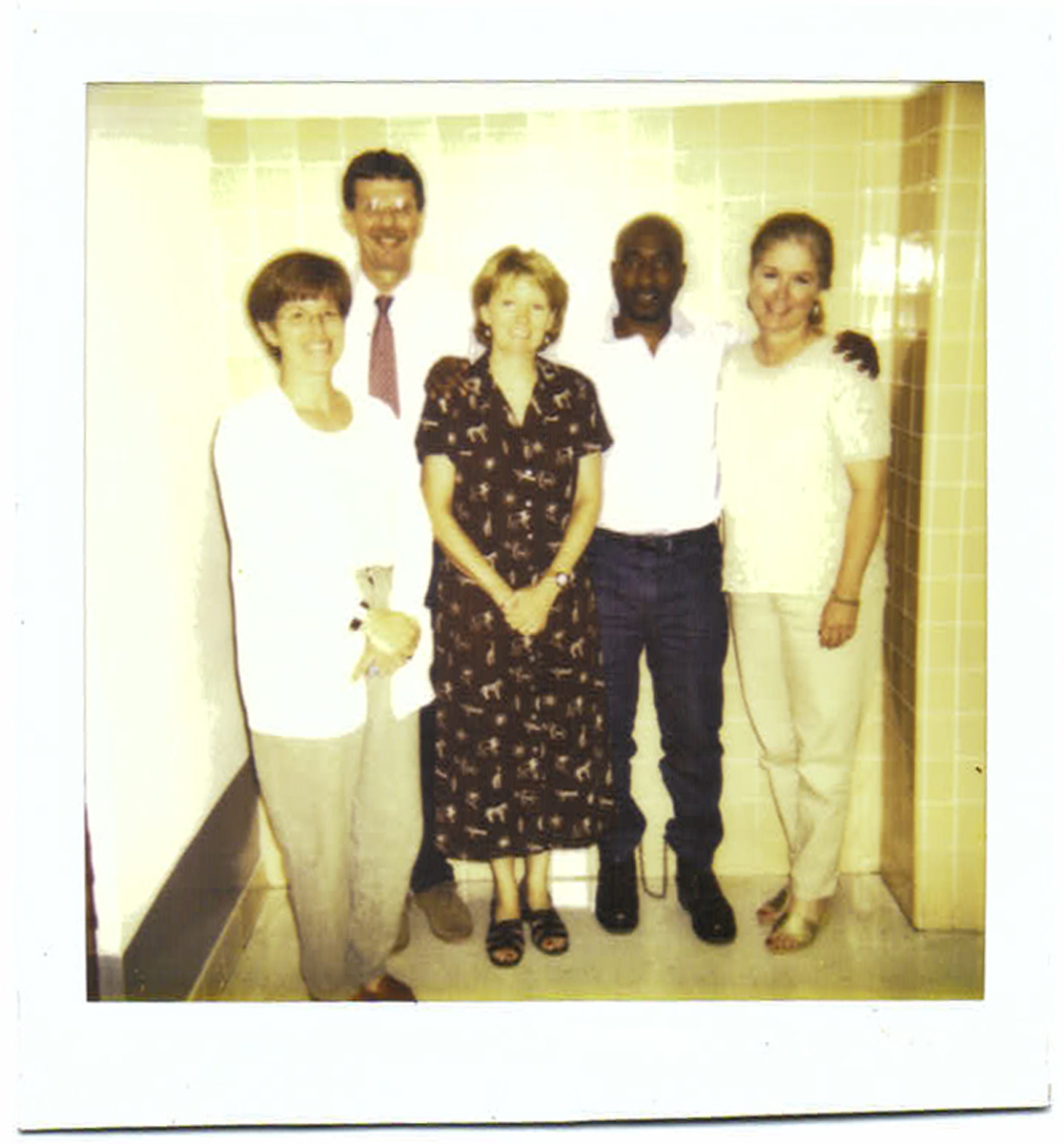
LSU Professor of Research Cecile Guin (center) coordinated with a team to support Feltus Taylor (second from right) while he was on death row. The team also included his lawyer Jean Faria (left), his spiritual advisor Charles deGravelles (second from left), and medical social worker Jane Smith (right), who was an LSU colleague and fellow graduate of Guin’s—they remain close friends and neighbors.
Over time, through her work researching the life histories of death row inmates, Guin
built a complex theoretical framework around the different pathways that can affect
how not just Feltus Taylor, but anyone, might go through life, including physical
factors, mental factors, environment, substance abuse, family background, social connections,
money, and education.
“Working on these death penalty cases was great training for the social workers at
LSU,” Guin said. “You can learn an awful lot. About humanity and grace—and about racism,
for sure. Discrimination, poverty. I don’t think anyone who worked on Feltus’s case
wasn’t a changed person from the experience.”
“But it’s a difficult field,” she continued. “Because in about 80 percent of the cases,
you find out these are good people who did bad things—people who could have been saved
somewhere along the way—and the crime came down to circumstances.”
To this day, Feltus Taylor was the only person whose death penalty mitigation case
Guin worked on who was executed. After his death, Guin continued to collect his records,
receiving previous correspondence from many of his pen pals around the world.

Cecile Guin now directs a program targeted at the child welfare system (The Louisiana Child Welfare Training Academy) affiliated with Southeastern Louisiana University in Hammond, Louisiana. Even now, 20 years later, Feltus Taylor’s story gives her hope.
The foreword of Feltus Taylor’s book was written by Sister Helen Prejean, his first spiritual advisor, who is a leading advocate for the abolition of the death penalty and author of the book Dead Man Walking (1993), which was made into a feature film.
Once Taylor’s manuscript was finalized, Guin expected a sense of relief that never
came. Instead, the book project “drove us crazy.”
“For years, I’d wake up in the middle of the night, thinking, ‘I’ve got to get something
done with this book,’” Guin remembers. “It’s a big responsibility, making a commitment
to someone to get their story told and then constantly holding it on the back burner.
The book market was saturated after Dead Man Walking. We didn’t know what to do. Also, it took years before I had anything close to a
healthy psychological response to Feltus’s death.”
Into Guin’s LSU office in 2001 came a bright-eyed student from Louisiana named Monique Morrison who was working toward her bachelor’s degree in broadcast journalism. As a student worker, she ended up working with Guin on several research presentations, impressing Guin with her energy and creative knack for visual communication and storytelling. Just weeks before Morrison was about to graduate from LSU in 2003, Guin handed her a thick binder and said, “I know you are moving to Los Angeles to pursue a career in the entertainment industry. This is the story of a very dear client of mine. Whatever you can do to tell his story, it’s yours.”
Morrison was surprised. She understood Guin was handing her something important but
didn’t know what to do with it at the time—she was moving to California to become
an actress.
“I didn’t have much experience in the world of developing a story into a film or TV project
at that time—my main focus was on my acting career,” Morrison recalls. “I took the
binder with me to California and kept it under my bed in my tiny, little studio apartment.
Then one day, and I remember this so well, I felt a sort of nudge to pull it out.
When I started reading it, I got chills all over my body and thought to myself, ‘What
is this?!’”
When the film and television writers’ strike happened in 2007, Morrison saw it as
an opportunity to take a break from acting and focus full-time on Feltus’s story.
At first, like Guin, Morrison had no idea what to do with Feltus Taylor’s life story.
But she felt responsible for telling it, to “carry the torch,” which led her toward
screenwriting and producing. It took her more than a decade to secure both the book
rights (co-owned by LSU and the Feltus Taylor Foundation) and the story rights (owned
by the Feltus Taylor Foundation) since it wasn’t clear at the time if any of Taylor’s
adopted or biological relatives could claim ownership.
Now, Feltus’s writings, shaped by Morrison, are finally ready to reach new and wider
audiences as a book and audiobook, which come out on April 16 with Bloomsbury, a worldwide
publisher headquartered in London.
“In the current context, Feltus’s story has become so much bigger. Now more than ever, I want to tell his story.”
Monique Morrison, LSU alumna
Sometimes people wonder why Morrison has spent over 20 years developing a project
about a killer.
“Nobody’s arguing Feltus’s crime—he committed the crime,” Morrison acknowledged. “The
moment he pulled that trigger, he became a murderer. He never denied that. But good
people do bad things… One of the questions I keep coming back to is, does the worst
thing you ever did define who you are? That’s something we should really think about
before we’re so quick to point the finger. Nothing’s really black and white. There’s
lots of grey, and the more you know about a person, the harder it becomes to judge.
Only once you walk the path someone else has traveled and lived their sorrows, doubts,
fear, and pain can you start to understand.”
For Guin, it’s a relief that Feltus Taylor’s story is finally getting the attention
she feels it deserves.
“Feltus gave me hope, and it’s good to be reminded of that,” Guin said. “To think
someone with Feltus’s background could be restored is just amazing. He was a remarkable
human being. A person can turn around and be the best they can be—maybe the best anybody
can be—and what we all aspire to. Feltus helped me mature. He pushed me to continue
my doctoral research on pathways into crime, and that also gave me respite. I needed
proper boundaries, and Feltus helped me deal with some of the problems I’d had separating
the sadness I felt with some clients through the years with the need to empower them.
He made my work more bearable. After Feltus, I felt there was nothing else in life
that could go wrong that I wouldn’t be able to handle.”
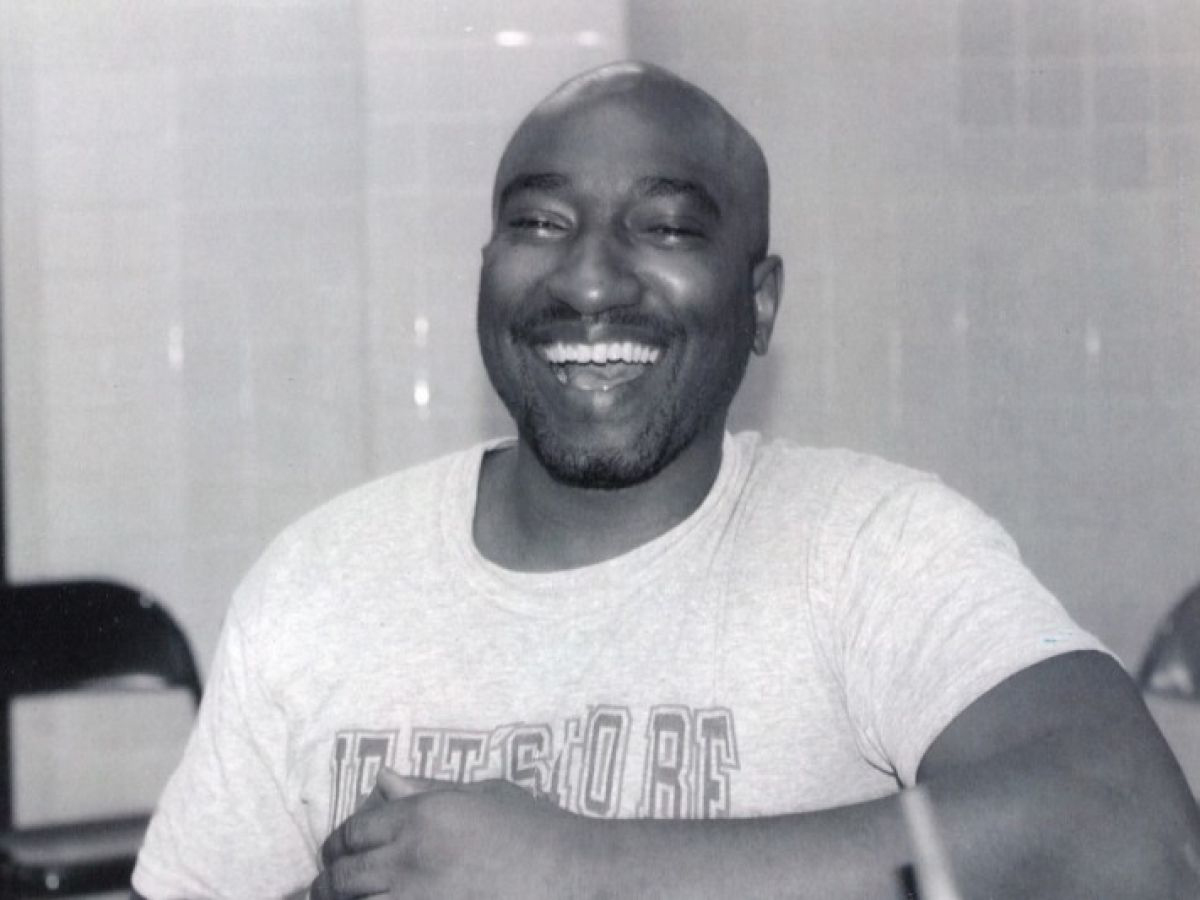
Feltus Taylor wrote prolifically while on death row and often signed his correspondence “Mr. Smile.”
A version of this story was originally published by LSU in 2020.