



LSU Research Insights: Experts Who Study Sleep Give Tips for Better Snoozing
March 06, 2026
Why do we need sleep? Why do some of us need more or less than others? What links obesity with sleep deprivation? Can changing when we eat improve our health if we cannot sleep enough?
To celebrate Sleep Awareness Week, two LSU researchers weigh in on what we know about sleep and what you can do to improve your snoozes for better health!
Prachi Singh
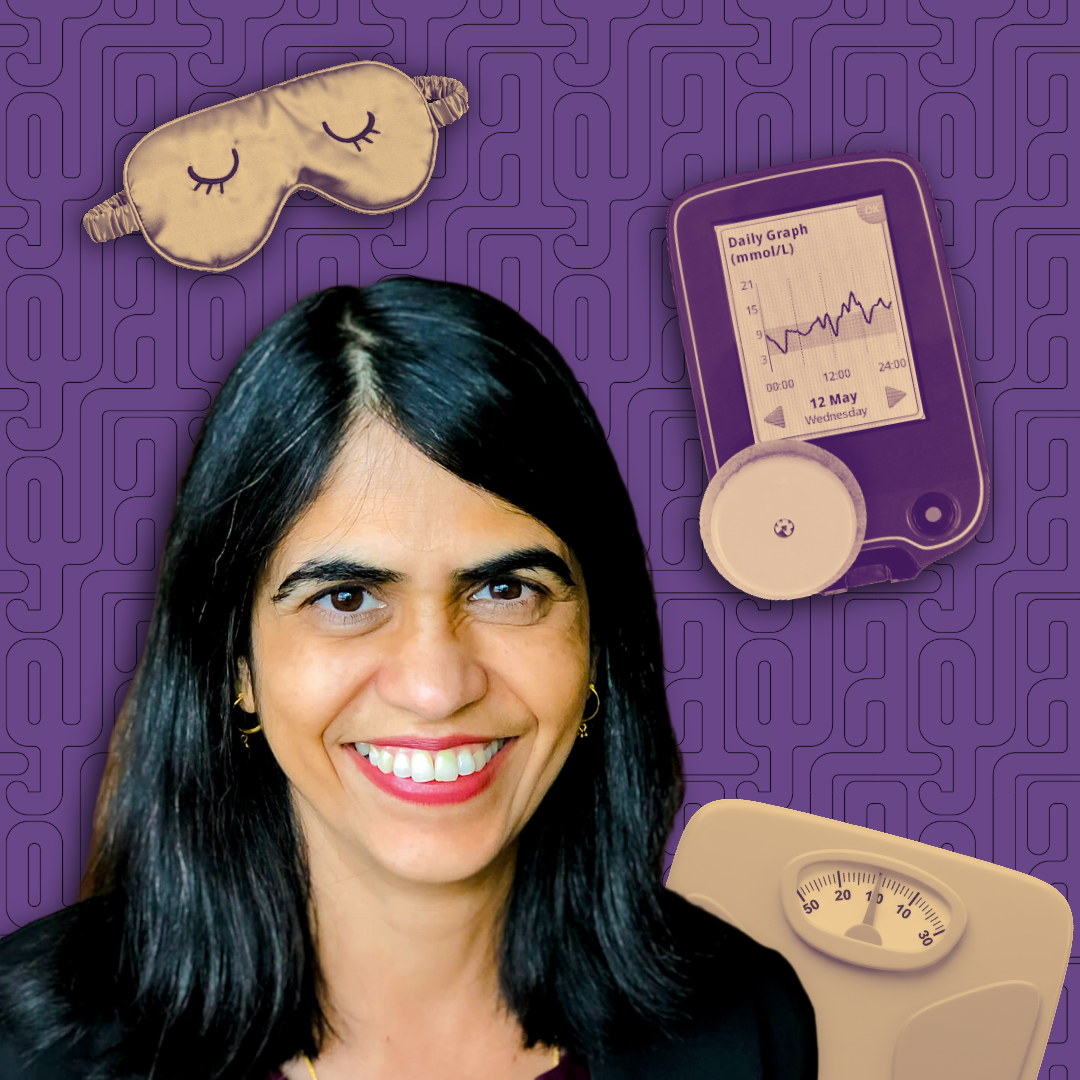
Sleep and Obesity, Obesity and Sleep
“Sleep is complex, but it affects everything,” says Dr. Prachi Singh, an associate professor and the director of Pennington Biomedical’s Sleep and Cardiometabolic Health Lab.
The great thing is that small shifts in daytime activities and bedtime routines can make a difference to sleep quality. Those include going to bed at the same time every night, limiting screen time before bedtime so your brain has time to power down, and doing something relaxing before bedtime, such as taking a bath or meditating.
Singh is also conducting research on lifestyle modifications to improve sleep, as well as a new peptide—Pep19—that may improve sleep while also helping people lose body fat. This research is showing how interconnected sleep is with metabolic health and inflammation.
Sleep Tip: Sleep tip: Sleep is free! It’s the easiest thing you can do to improve your health. If you focus on improving sleep, then depression and anxiety levels go down. You’re able to feel happier and see an improved quality of life.
Visceral fat accumulation can lead to chronic inflammation and insulin resistance, both of which impair sleep quality. Drug and lifestyle interventions—such as intermittent fasting or avoiding late-night eating—that lower inflammation and improve blood sugar and other metabolic markers can improve sleep.
Interestingly, sleep has a two-way relationship with metabolic health; inadequate sleep can increase appetite and contribute to insulin resistance and blood sugar spikes. This can create “a vicious cycle” that contributes to weight gain and disease risk.
There is a “critical need for integrated approaches that consider the improvement of both sleep and metabolic health in the treatment and prevention of obesity,” Singh writes in a recent study published in Diabetes Metabolism Research & Reviews.
Learn more and get better sleep with Dr. Singh:
- Pennington Biomedical’s Prachi Singh Secures $3.7 Million Grant to Study Reduced Sleep and Intermittent Fasting
- Study Points Out that a Synthetic Molecule Helps Reduce Visceral Fat and Improve Sleep
- July’s Small Shift: Prioritizing Sleep
- During Mental Health Awareness Month, Practice Small Shifts for Mental Health and Resilience
Alyssa Johnson

What Your Inner Fruit Fly can Teach You about Sleep
We know that sleep is critical for human health. Inadequate sleep, especially if it is chronic, can put you at risk of heart disease, metabolic disorders, and dementia. But why exactly is sleep so critical, and exactly how much do we need?
According to Alyssa Johnson, an associate professor in the LSU College of Science, Department of Biological Sciences, the answer to this question is still a fundamental mystery.
“For most individuals, 7-8 hours of sleep is required to maintain good health,” Johnson said. “However, there are some rare individuals who can get by on much less sleep.”
Sleep Tip: Our brains lock in what we learn when we sleep, so don’t pull an all-nighter before an exam! If concepts aren’t clicking, take a rest and sleep so your brain can process the information. Clarity will often come after a good night’s sleep.
Over the last few years, researchers have identified a few rare genetic mutations that allow some people to get by on much less sleep. The mutations include a DEC2 gene mutation and a SIK3 gene mutation. So-called “natural short sleepers” with these mutations can sleep about 4-5 hours per day with no negative health impacts.
“These unique genetic mutations might confer pro-health benefits that allow these individuals to cope with less sleep,” Johnson and colleagues write in a recently published study investigating sleep mutations in fruit flies.

Fruit fly sleep chambers
To better understand how rare individuals can thrive with less sleep, Johnson’s lab genetically engineered fruit flies to mimic human natural short sleepers. The engineered fruit flies had mutations in the dec2 gene, leading to a faulty DEC2 protein and increased wakefulness.
The strange thing? These fruit flies also lived longer—likely unrelated to their reduced need for sleep, but an outcome of the dec2 mutation. In particular, their mitochondria had improved function.
“Remarkably, we found that this genetic mutation not only reduces sleep but over-activates cellular stress response systems that led to improved health and even better memory” Johnson said.
“Understanding these overactive stress response mechanisms could not only lead to treatments for sleep disorders but could unlock universal pro-health systems that could be tapped for healthy aging interventions.”
The takeaway: Sleep is not one-size-fits-all. The amount of sleep you need may vary based on your genetic background. Natural short sleepers have genetic mutations that promote resilience to sleep deprivation and enhance stress tolerance, something that the rest of us could potentially tap into.
Read the study: A familial natural short sleep mutation in dec2 extends healthspan and lifespan in Drosophila
This work was led by a graduate student in Johnson’s lab (Pritika Pandey), who is now a Postdoc at UNC-Chapel Hill. This work was funded by an R35 MIRA grant from NIH/NIGMS.